Table Of Content
- bc honors 2024's outstanding members of the AAPI community
- Shofuso: Philadelphia’s Japanese House and Garden
- This Underrated Japanese Garden Just Might Be The Most Beautiful Place In Philadelphia
- 5: Spring on Tap Beer Festival
- Philadelphia Zoo
- Descanso Gardens
- A Brief History of Scent With Saskia Wilson-Brown
It was shipped to New York, and exhibited at the Museum of Modern Art, before moving to its permanent home within a nationally-ranked garden located in West Fairmount Park in 1958. Fujii was obsessed with the idea of creating a "real, uncompromising Japanese garden in the U.S." and spared no expense to bring his vision to life. Centering his garden around a large koi pond with a waterfall, he included natural elements like rocks and local shrubbery and even had a teahouse shipped in from Japan, resulting in a spectacular oasis that surely gave his patrons something to boast about. With the Cherry Blossom festival in full swing this week, we take a look at the Shofuso Japanese house and Garden. Located in Fairmount Park, it is a traditional-style Japanese house and nationally-ranked garden that reflects the history of Japanese culture in Philadelphia, from the 1876 Centennial Exposition to present day.
bc honors 2024's outstanding members of the AAPI community
This historic site and museum includes a hill and pond garden with a tiered waterfall, island, and koi fish, a tea garden featuring a traditional tea house, and a courtyard garden leading to a bathhouse. The house is modeled on an early 17th-century temple guest house and exemplifies shoin-zukuri architecture in terms of key details and classical proportions. During its late March to mid-December opening months, entry to Shofuso requires a fee and a timed ticket (reserve ahead) due to the relatively small space. Visitors remove their shoes, in accordance with Japanese custom, and cross the genkan, or doorway, entering a world apart from urban bustle, where docents and panels provide information about details of the structures. Many people begin by looking up at the house’s roof, made of bark layers from the rare Japanese hinoki cypress; there are no others like it outside of Japan. Japanese landscape architect Tansai Sano designed the garden in 1958 to complement the house; it was impressively restored in 2012.
Shofuso: Philadelphia’s Japanese House and Garden
Today, that history is reflected in the district's alluring mix of cultural centers, clothing shops, restaurants, and bars. The bright and beautiful space houses the fantastic collection of Peter Lai, a fashion designer who fell in love with Japanese design at an early age and has spent decades amassing a treasure trove of art, antiques, and collectibles from Japan. This South Bay botanic garden covers 87 acres on the northeast side of the Palos Verdes Peninsula.
This Underrated Japanese Garden Just Might Be The Most Beautiful Place In Philadelphia
The Shofuso house hosts over 30,000 visitors each year from more than 20 different countries. The 17th century-style Shofuso Japanese house (meaning “Pine Breeze Villa”) was first constructed in Japan in 1953. It was designed using traditional techniques and materials as part of an exhibition at New York’s Museum of Modern Art (MoMA). Although the house is owned by the City of Philadelphia, the Friends of the Japanese House and Garden (FJHG), a 501(c)3 nonprofit, organized to care and preserve this unique site in 1982.
5: Spring on Tap Beer Festival
With only one seating per night, this is the kind of destination where a handful of lucky diners are privy to an exemplary culinary spectacle. To kick off the kaiseki, the chef serves a small bite, or sakizuke, like chilled, charred eggplant with ginger and dashi. From there, it's a seasonal celebration artistically arranged on vintage Japanese pottery and porcelain collected by the chef. Local corn and sea scallops is transformed into kakiage; bonito is lightly smoked over rice bran straw; and miso-glazed black cod is folded into a luscious rice pot to conclude the meal. Perhaps the best part of Little Tokyo is the way it celebrates the old and the new. On the north side of East 1st Street, you'll still find legacy restaurants like Daikokuya, Suehiro and Fugetsu-Do, a Japanese sweets shop that has been operating since 1903 (their mochi recipe hasn't changed in over a century).
Philadelphia Zoo
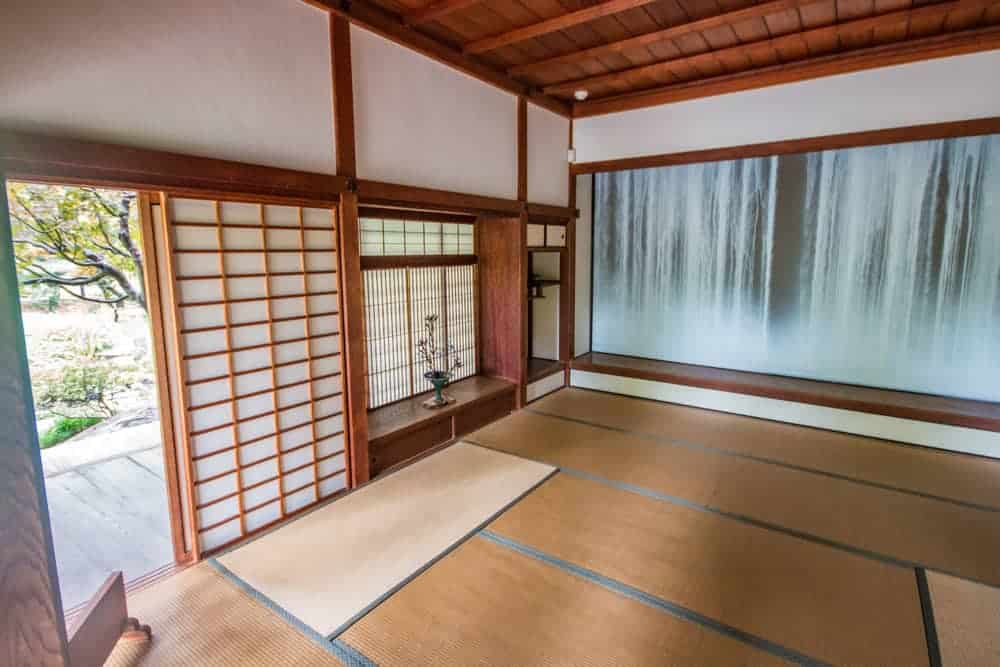
The building was constructed using traditional Japanese techniques and materials imported from Japan, and was originally exhibited in the courtyard of the Museum of Modern Art (MoMA) in New York. After two years, it was relocated to Philadelphia and reconstructed in 1958.[2] In 1976, a major restoration was conducted by a cadre of Japanese artisans in preparation for the American Bicentennial celebration. In 2007, contemporary Nihonga artist Hiroshi Senju created and donated an interior installation of twenty waterfall murals. The Shofuso house is modeled after an early 17th-century temple guest house. It is built in a streamlined style that focuses on joining beams and slats with hand tools and minimizes using nails in its construction. The house includes a kitchen, tea room, and bath, which visitors can explore.
Descanso Gardens

To get a sense of the history embedded in these streets, Noguchi points to the museum itself. One of its buildings, a former Buddhist temple, was used as a storage facility in the 1940s, when residents of Little Tokyo were forced to abandon their homes. The decree, known as Executive Order 9066, resulted in over 120,000 Japanese Americans across the U.S. being taken to detention facilities, where they faced often brutal living conditions. Overnight, the character of the neighborhood was irrevocably changed. "In the 1980s, Little Tokyo was down and out," says Rick Noguchi, the chief operating officer at the Japanese American National Museum (JANM).
A New Exhibition Highlights Modernism's Debt to Japanese Architecture - Metropolis - Metropolis Magazine
A New Exhibition Highlights Modernism's Debt to Japanese Architecture - Metropolis.
Posted: Fri, 11 Sep 2020 07:00:00 GMT [source]
Case in point—amberjack sashimi with onions and soy, where each morsel is sliced, seasoned and set before your eye. This may be tailed by such delicious nigiri as Hokkaido scallops, kohada and fatty tuna. The neighborhood is just a few miles from UCLA campus, and as a result, it's a popular hangout for students looking for a place to unwind. On a typical weeknight, you'll see groups queueing up for fruit tea (boba) at Yi Fang or sitting down to feast at Tsujita, a beloved L.A. There's even a karaoke bar, if you're desperate to belt out your favorite top 40 hits. Not only will this site work on your laptop or desktop computer, you'll also feel right at home on any modern smartphone or tablet.
The 2019 Cherry Blossom Festival’s opening weekend, in 11 bright photos - Curbed Philly
The 2019 Cherry Blossom Festival’s opening weekend, in 11 bright photos.
Posted: Tue, 09 Apr 2019 07:00:00 GMT [source]
My friend and I went one very warm October day hoping to find some fall foliage, and I fell in love with this little gem. While we were too early for foliage, I find that Shofuso is so pretty it really doesn’t matter what time of year you go. We pretty much spent the afternoon chatting and catching up on one of the engawa (porches) and then roaming about the house and getting more of an insight into what life would’ve been like in one of these traditional homes. Visitors must remove their shoes to walk through the house in keeping with Japanese tradition, so wear or bring socks. Shoe coverings are available for those who cannot remove their shoes.
Building it required permission from Japan’s National Forestry Agency to harvest the cypress wood. Inside, you’ll find 20 murals entitled “Waterfall” that were inspired by the waterfall in the garden. Donated by painter Hiroshi Senju, the unique murals are done on mulberry paper using a custom “Shofuso color” made by extracting and combining colors from elements in the house and garden. Japanese prime minister Shigeru Yoshida visited Shofuso in November 1954, escorted by John D.
Visitors can sign up to experience on-site tea ceremony demonstrations led by Urasenke Philadelphia for insight into the significance of this centuries-old ritual. A courtyard garden with a stream is in the center of the bathhouse and kitchen area. Designed in a style different from the main room, the kitchen represents what might be found in a rustic traditional farmhouse. Two of the most unique elements of the house are its roof and its artwork.
After a fire destroyed the temple gate in 1955, Shofuso was brought to the site in 1957. In 1958, the garden was redesigned by Japanese landscape designer Tansai Sano to compliment the new structure in the style of a 17th century viewing garden, and Shofuso opened to the public on October 19, 1958. If you visit Shofuso, remember that shoes are required in the garden, while socks or stockings—sans shoes—are required in the house. If one is barefoot, disposable shoes are available, as are shoe coverings if one cannot remove their shoes. Visitors are invited to tour the house and feed the koi fish that swim in a pond under a 75-year-old weeping cherry tree, as well as explore the beautiful garden landscape that stretches for more than an acre.
The Shofuso Japanese House and Garden is one of the most impressive sites in the entire park system — and it’s easy to see why! It was the mutual respect for one another’s work, their shared aesthetic and philosophical temperaments, which sustained the collaborators lifelong friendships, even through the most difficult times for Japanese American relations. Carefully curated collections of archival and contemporary architectural portraits of Shofuso, Nakashima and Raymond’s sites are presented with a set slide projector. Images of places in different times and seasons reveal the living life of interior, exterior and landscape as a cohesive total. Designed by architect Junzo Yoshimura, this traditional-style Japanese house, Shofuso, was built in Japan in 1953 using traditional techniques and materials.


No comments:
Post a Comment